A retail media network, or RMN, is a retailer operated advertising platform that enables brands to reach shoppers through retail owned media inventory, first party data, and measurable commerce outcomes. In MENA, RMNs can combine ecommerce, apps, loyalty ecosystems, physical store media and external digital channels to help brands engage high intent audiences across the buying journey.
For MENA brands, a retail media network is not simply an ecommerce ad placement. It is an accountable commerce media layer that connects high intent audiences, retail inventory, first party data and measurable commercial outcomes across onsite, offsite and in store channels.
Brands looking to activate this approach across the region can explore Radius by Platformance, a retail media solution for UAE and Saudi Arabia, built to connect relevant retail media opportunities with outcome-led activation and measurement.
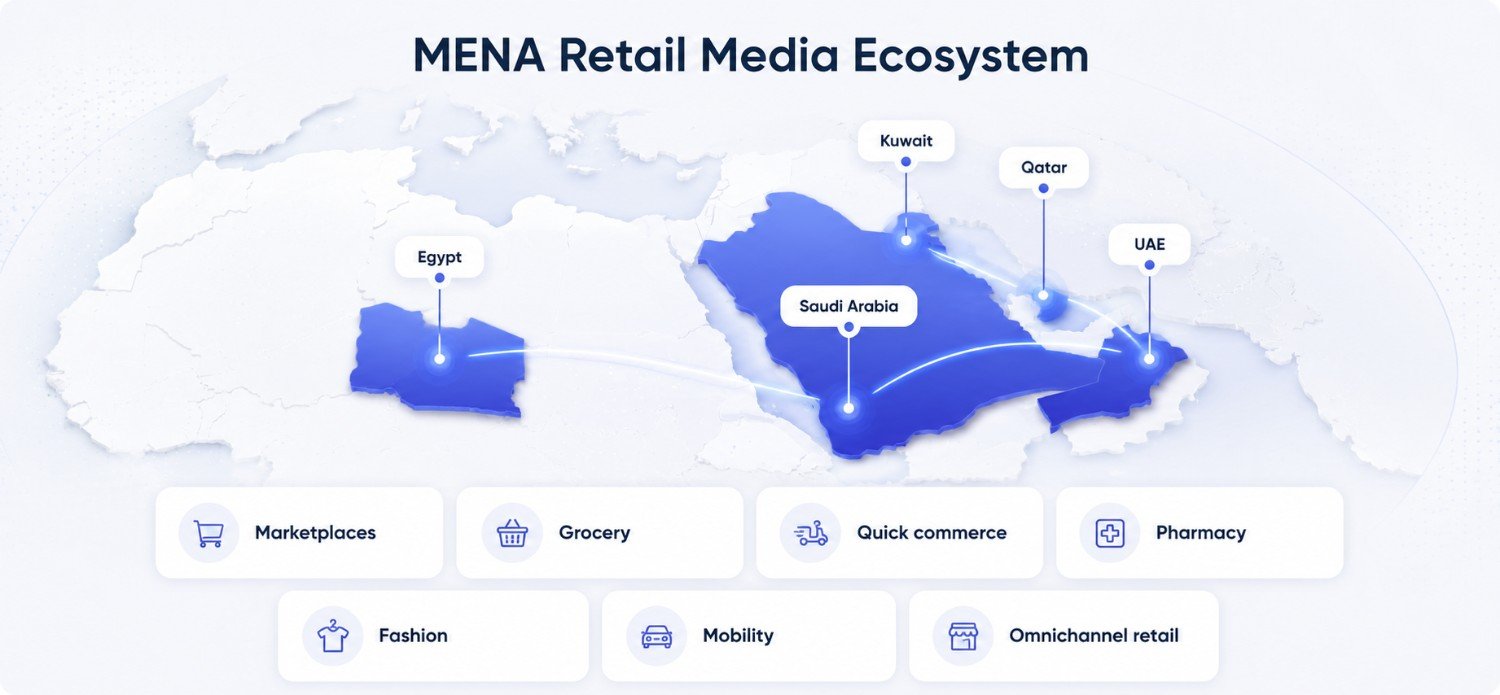
That distinction matters, because audiences and inventory across the region often sit across marketplaces, retailer apps, loyalty ecosystems, physical stores and media partners rather than in one consolidated place, which is exactly the fragmentation an RMN is built to address.
RMNs are relevant well beyond conventional ecommerce, spanning marketplaces, grocery, quick commerce, pharmacy, mobility and broader omnichannel brands with a presence in the region.
Retail Media vs. Retail Media Network
Retail media and retail media network are related terms, but they describe different things, and the distinction is worth being precise about.
Retail media is the broader advertising category or practice. A retail media network is the retailer operated infrastructure, commercial offering or platform through which that advertising is actually bought, delivered and measured.
For a fuller definition of the broader category, see our What Is Retail Media? Guide.
How Retail Media Networks Work
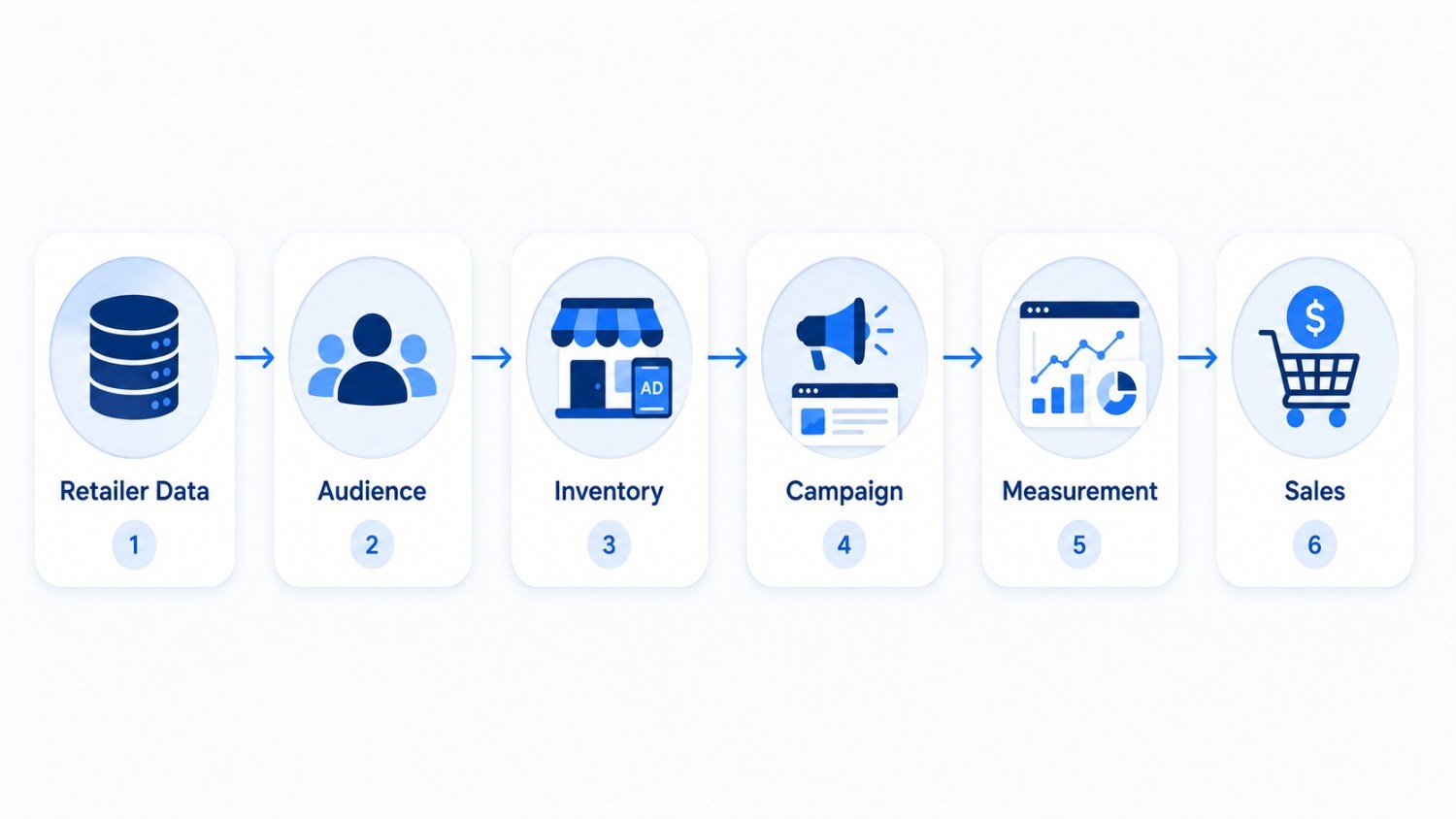
A retail media network generally operates through a consistent five step model, regardless of the specific retailer or market.
- The retailer or marketplace makes media inventory available.
- Brands choose campaign objectives, audiences, products, formats and budgets.
- The RMN activates campaigns across onsite, offsite and/or in store inventory.
- First party shopper signals support audience selection and ongoing optimisation.
Reporting connects media delivery back to the commercial outcomes both parties agreed on.
Not every RMN offers the same depth of targeting, formats, self serve access or measurement, so this framework is a useful lens for comparing networks rather than an assumption that they are interchangeable.
Some networks offer direct media buys, others operate a fully managed service, and a growing number offer self serve tools or a hybrid of the two.
It is also worth distinguishing inventory from data: both matter to a campaign’s potential, but neither one alone guarantees performance.
That is exactly why outcome aligned measurement needs to be part of the plan before a campaign launches, not something worked out afterward.
Onsite, Offsite and In Store Retail Media
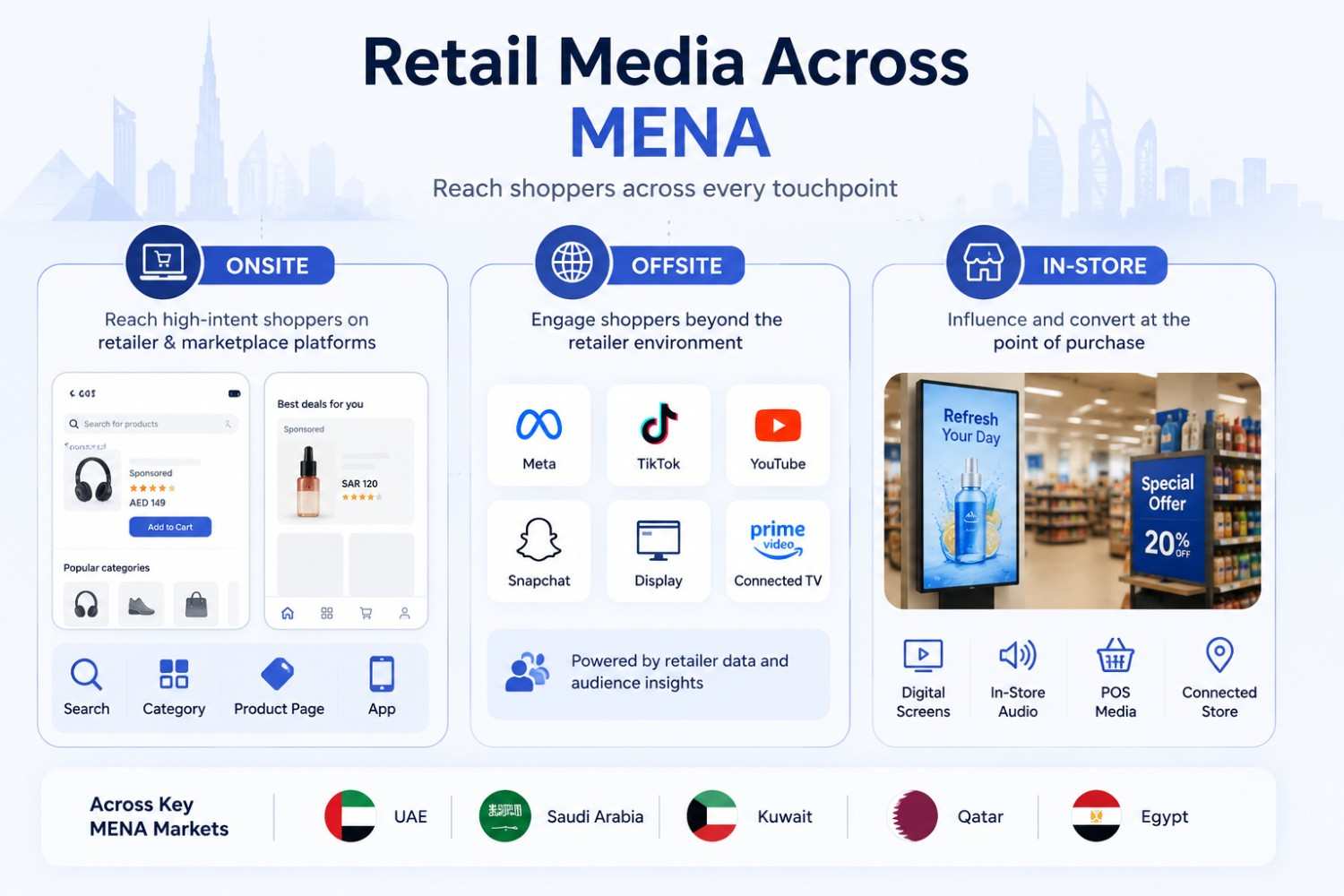
Onsite Retail Media
Onsite retail media covers ads on retailer or marketplace websites and apps, including sponsored product placements, search results, category pages, product detail pages, display units, homepage placements and retailer app inventory.
These placements tend to reach shoppers close to a purchase decision, which makes onsite media particularly well suited to product discovery, conversion, visibility and digital shelf competition.
Offsite Retail Media
Offsite retail media is retailer data informed activation that runs beyond the retailer’s own owned properties, spanning display, programmatic, video, connected TV, social, audio and digital out of home.
It is best suited to awareness, consideration, re-engagement and extending retail audiences before or after a shopping visit. Because offsite activation depends on data being shared and activated responsibly, data governance and measurement methodology are worth assessing carefully before buying.
In Store Retail Media
In store retail media spans digital screens, shelf displays, checkout screens, kiosks, in store audio, sampling and activation zones.
Its value comes from influencing the shopper closer to the physical shelf, right at the point where many purchase decisions are actually finalised, though measuring in store exposure and sales accurately remains a genuine challenge compared with onsite clicks.
In omnichannel environments where physical stores, loyalty programmes and ecommerce apps coexist, as is increasingly common across the region, in store media can be particularly valuable precisely because it connects to the same shopper journey rather than sitting apart from it.
MAF Precision Media, for example, describes an omnichannel UAE model spanning onsite, offsite and in store activation, with its Carrefour estate including digital screens across hypermarkets (source: IAB MENA Retail Media Network Capability Map).
Why First Party Data Matters
First party data is the core differentiator behind a retail media network’s value. In retail terms, it covers purchase history, loyalty interactions, browsing behaviour, category affinity, basket signals, app engagement and store interactions.
This kind of data can enable relevance, segmentation, suppression, retargeting, frequency management and sales reporting in ways that generic audience data simply cannot match.
Access, use, matching, retention and activation all depend on consent, contracts, platform controls and local legal requirements, so this should be treated as a governed process rather than an assumed capability.
Radius connects brands to relevant retail media opportunities and audiences, rather than owning or controlling retailer data directly.
The strategic question worth asking of any RMN is straightforward: what data is available, how is it activated, and what outcome can it credibly measure?
Retail Media Formats and Campaign Objectives
Where genuinely relevant, this format set connects to Platformance’s broader capability across programmatic, connected TV, contextual and interactive formats, alongside outcome based optimisation.
How to Measure Retail Media Performance
Retail media measurement is best understood across a few layers, moving from basic delivery through to genuine commercial confidence.
- Delivery: reach, impressions, frequency, viewability, video completion rate.
- Engagement: click through rate, retailer site visits, product detail page views, add to cart actions.
- Commerce: sales, units sold, conversion rate, revenue, ROAS, cost per order, new to brand customers.
- Business quality: margin, repeat purchase, qualified leads, app events, and customer lifetime value where available.
- Measurement confidence: attribution windows, methodology, control groups, incrementality, reporting cadence, and independent verification.
Closed loop measurement connects campaign exposure and media activity with a commerce outcome, such as a purchase, sale or customer action, within an agreed measurement framework. It is genuinely valuable, but buyers should still ask how attribution is calculated, what is measured, what is modelled, and whether the resulting sales are truly incremental.
No single measurement standard applies uniformly across every MENA retailer or media network, so this is worth confirming case by case. Precision Media explicitly positions closed loop measurement as a way to connect campaigns to sales impact, which reflects how central accountable measurement has become to RMN buyer expectations across the region.
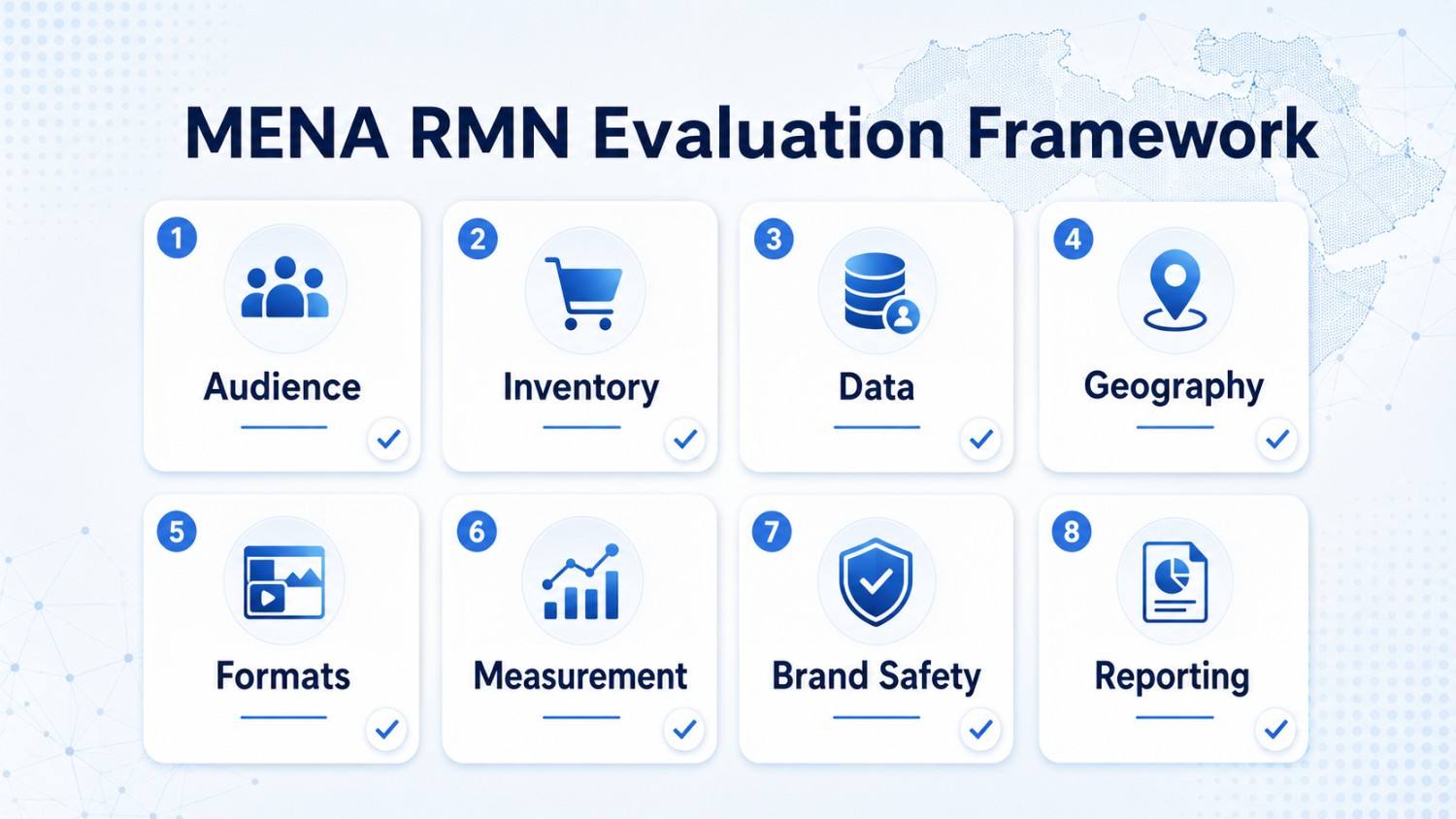
How Brands Should Evaluate a Retail Media Network
A structured evaluation makes the difference between a network that delivers real results and one that simply looks impressive on paper.
- Audience relevance: Does the network reach the customer segments that matter to your brand?
- Inventory quality: Which onsite, offsite and in store placements are genuinely available?
- Geographic coverage: Does it serve UAE, Saudi Arabia, or your specific target markets?
- Data capability: What first party data is available, and under what governance model?
- Format fit: Are the formats suitable for awareness, consideration, conversion or omnichannel activation?
- Measurement methodology: Can you understand attribution, sales linkage and incrementality?
- Outcome alignment: Are the commercial terms linked to meaningful outcomes, or only to media delivery?
- Brand safety and fraud controls: How is inventory curated, monitored and verified?
- Operational support: Is the model self serve, managed, or hybrid?
- Reporting transparency: Can your team access understandable, actionable campaign reporting?
For brands that need more than media delivery metrics, the right retail media partner should bring together relevant inventory, transparent reporting, brand safe activation and genuine commercial accountability.
Retail Media Network Examples in MENA
Retail media activity across the region spans marketplaces, grocery, quick commerce, pharmacy, fashion, mobility and omnichannel retailers. In the UAE, Carrefour’s Precision Media is one example of a retailer backed network offering onsite, offsite and in store capability (source: IAB MENA Retail Media Network Capability Map).
Landmark Reach has positioned its offering around shopper engagement across in store, online and open internet environments . IAB MENA’s ECOScape maps networks and platforms across the UAE, Saudi Arabia, Kuwait and other regional markets, and its 2026 Capability Map evaluates 27 retail media networks active across the GCC, including their onsite, offsite, in store, measurement and pricing capabilities, illustrating just how broad the developing retail media landscape already is.
Radius is positioned as a unifying, outcome oriented Platformance solution for brands, retailers and media networks seeking scalable activation across UAE and KSA. Platformance announced Radius availability for these markets with MCN as a launch partner.
How to Build a Retail Media Strategy
- Define the business outcome you need, not just the media KPIs that sit beneath it.
- Prioritise retail partners based on customer overlap, category fit, inventory and market coverage.
- Select onsite, offsite and in store formats based on where they fit the buying journey.
- Ensure product pages, offers, stock availability, creative and tracking are genuinely retail ready.
- Agree on attribution, reporting and success metrics before launch, not after.
- Test formats, products, audiences and regional market splits deliberately.
- Optimise based on incremental commercial value, not impressions alone.
Why Radius by Platformance
Radius is Platformance’s retail media solution, designed to connect brands with retail media opportunities across MENA.
Platformance’s positioning around Radius emphasises outcome led activation, curated quality supply, transparent measurement, brand safety and anti-fraud controls, connecting where relevant to the business’s broader capabilities across programmatic reach, contextual relevance, connected TV, creator content and independently verified outcomes.
Radius is built to support brands, retailers and media networks alike, not only advertisers.
Explore Radius by Platformance for retail media activation across UAE and Saudi Arabia to learn how Platformance can help build an accountable, outcome-focused retail media strategy.
Talk to the Radius team about your UAE and Saudi Arabia retail media strategy.
Frequently Asked Questions
What is a retail media network?
A retail media network is a retailer or marketplace operated advertising offering that gives brands access to advertising inventory, retailer data, campaign tools and performance reporting. It can include ads on websites and apps, external media activated with retail data, and in store advertising opportunities.
How do retail media networks work?
Retail media networks allow brands to buy advertising placements and reach relevant shopper audiences through a retailer's digital channels, physical store media, or data enabled external media. Campaigns are then measured using agreed metrics such as sales, conversions, ROAS or new to brand customers.
What is the difference between retail media and a retail media network?
Retail media is the broader advertising category. A retail media network is the retailer's or marketplace's infrastructure for selling, delivering and measuring that advertising.
What are onsite, offsite and in store retail media?
Onsite media appears on retailer owned websites and apps. Offsite media uses retailer data to reach audiences on external channels. In store media includes advertising opportunities inside physical retail locations, such as screens, audio, checkout media and activations.
Why is first party data important in retail media?
First party retail data can help brands reach more relevant shopper groups using signals such as purchase behaviour, loyalty activity, category interest and browsing activity. It can also support measurement closer to actual commerce outcomes, subject to privacy and data governance controls.
How should brands measure retail media ROI?
Brands should measure retail media using delivery, engagement, conversion, sales and profitability metrics. They should also confirm attribution windows, reporting methodology, sales linkage and incrementality before launching campaigns.
Sources & Further Reading
IAB MENA - Retail Media Network Capability Map
IAB MENA - MENA Retail Media ECOScape
IAB Europe - Commerce Media Measurement Standards V2.1
.jpg)